How Freelancers Can Manage Multiple Projects with Voice Journaling
Freelancers juggling multiple projects lose track of tasks constantly. Voice journaling captures priorities, deadlines, and context in 60 seconds flat.
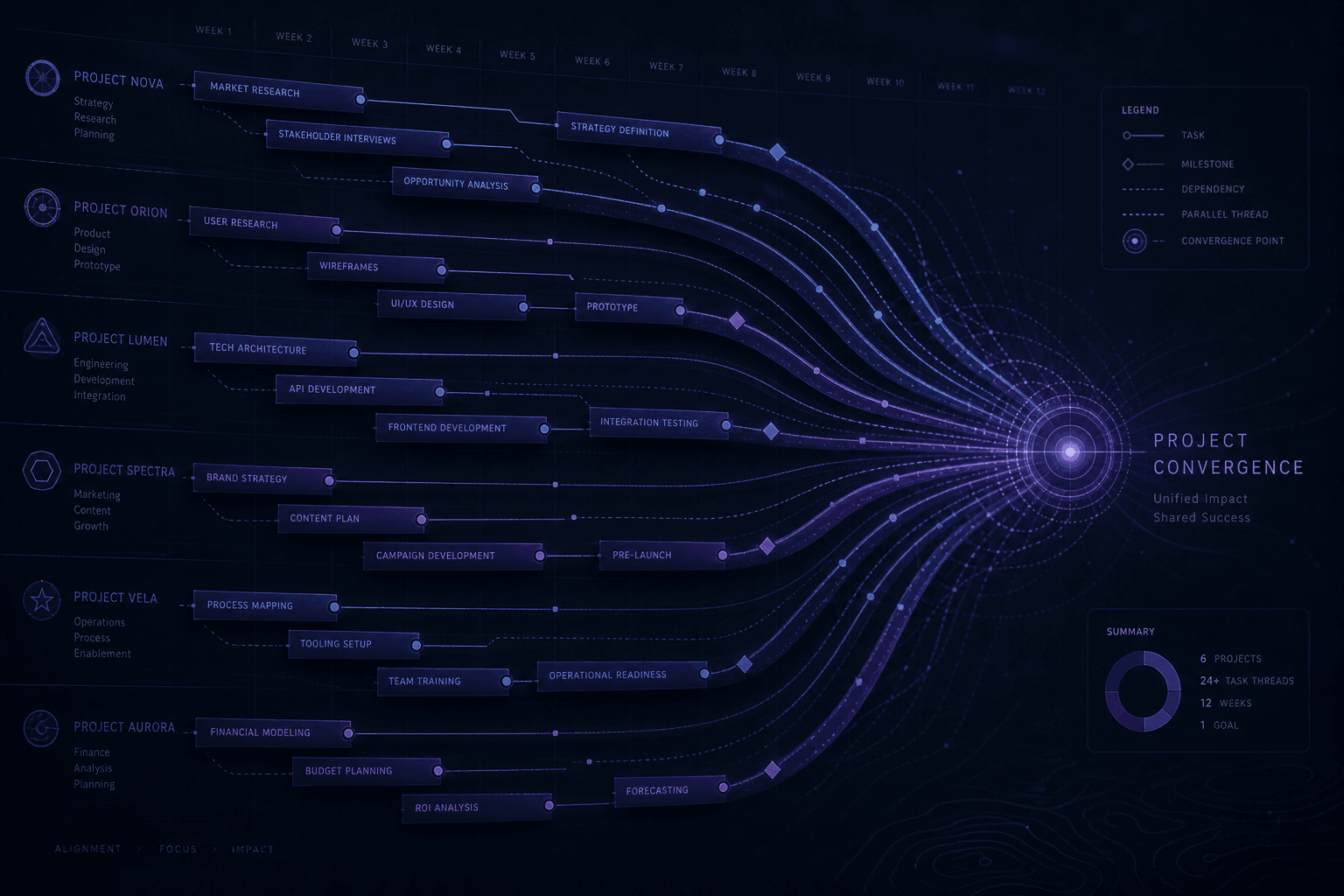
The Real Problem: Context Switching Kills Freelancers
You finish a client call at 2pm. By 2:15, you're deep in a design file for a different project. By 3pm, you've forgotten two action items from that call.
This isn't a discipline problem. A study from the American Psychological Association found that shifting between tasks can cost up to 40% of productive time. For freelancers running three to five projects simultaneously, that tax compounds fast.
Most project management tools assume you work on one thing at a time, inside one team. Freelancers don't. You're the team. You're the PM, the executor, the accountant, and the client manager — often within the same hour.
Why Voice Beats Typed Notes for Multi-Project Freelancing
Writing things down requires you to stop, open an app, choose a project, type, and organize. That's five friction points between having a thought and capturing it.
Speaking takes one: talk.
Research from the National Library of Medicine consistently shows that speaking is roughly three times faster than typing for most people. When you're bouncing between a Slack thread, a Figma file, and an invoice, those saved seconds matter.
Voice journaling for project management works for freelancers because it matches how your brain already processes work. You don't think in bullet points. You think in streams: "Okay, the Johnson site needs the header fixed before Thursday, and I told Maria I'd send the logo options by end of day, and I still haven't invoiced for that copywriting project from last week."
That stream — spoken aloud in 45 seconds — contains three projects, three tasks, and two deadlines. A good system captures all of it without you having to sort anything manually.
The Brain Dump Method for Freelance Project Management
Here's the practical version. Between projects (or whenever you feel the mental pile-up), do a 60-second brain dump. Just talk through what's on your plate.
Name the project. Name the task. Name the deadline if there is one. Move on to the next project. Don't organize. Don't prioritize yet. Just get it out of your head.
This works because of what psychologist David Allen calls "open loops" — incomplete tasks that keep cycling through working memory. His Getting Things Done methodology is built on one core idea: your brain is for having ideas, not holding them. Voice is the fastest way to close those loops.
If you've read this far, Acuity does exactly this. You do a voice brain dump — any time of day — and the AI extracts your tasks, tracks your goals across projects, and spots patterns in where your time and energy actually go. Your weekly report shows the full picture across every project. First 100 members get 30 days free, no card required. 82 founding spots left.
What Changes When You Actually Do This
Freelancers who voice-journal between projects report three specific shifts:
Nothing falls through cracks. The client request from Tuesday's call doesn't vanish because you got buried in Wednesday's deadline. It's captured, extracted, and waiting for you.
You see your actual workload. Most freelancers underestimate how much they're carrying. Hearing yourself list seven active deliverables across four clients is a reality check no task app provides.
You make better decisions about new work. When you can see your real capacity — not the optimistic version in your head — you stop over-committing. That means fewer missed deadlines, fewer apology emails, and more repeat clients.
FAQ
How long does a voice brain dump take for project management?
Most freelancers need 45 to 90 seconds. You're not writing a status report — you're verbally offloading what's in your head. The AI handles the sorting.
Can voice journaling replace my project management tool?
It replaces the capture and review layer. You still might use Trello or Notion for client-facing boards, but voice journaling ensures nothing gets lost between those tools.
When should freelancers do a brain dump?
Between projects, after client calls, or whenever the mental pile-up hits. There's no fixed time — the point is matching the tool to your actual workflow, not adding another rigid habit.
How does voice journaling help with freelance burnout?
It makes your invisible workload visible. Most freelance burnout comes from carrying too much mentally without realizing it. Hearing and reviewing your full task list across projects helps you set boundaries before you hit the wall.
Keep Reading
If you're running a solo business, see how weekly voice reviews drive solo business productivity. And if context switching is frying your focus, check out how daily brain dumps improve decision-making clarity. For more on the freelancer workflow, visit our freelancers page.
Brain dump daily. Get your life back.
Try Acuity free for 14 days. Just talk. No typing. Just talk.
No credit card required · Cancel anytime